erzurumevdenevenakliyatci – The game controller has remained remarkably consistent for two decades. The dual-analog stick layout established by the PlayStation 2 has become the industry standard, with only minor variations across platforms. But haptic feedback—the technology that makes controllers vibrate and respond to in-game events—has evolved dramatically. Sony’s DualSense Edge Pro, launched in early 2026, represents the most sophisticated implementation of haptic feedback ever created for a gaming controller, and it is redefining what players can feel.
The Haptic Revolution: How Sony’s DualSense Edge Pro Is Redefining Controller Feedback
The DualSense Edge Pro builds on the haptic capabilities of the standard DualSense controller, which introduced adaptive triggers and advanced vibration to the PlayStation 5. The Edge Pro refines every aspect of the haptic experience. The adaptive triggers have been redesigned with more precise resistance mechanisms, allowing developers to simulate a wider range of sensations: the gritty pull of a bowstring, the progressive resistance of a brake pedal, the mechanical click of a trigger being pulled. The triggers can be customized with different resistance profiles for different games, and users can save profiles for quick switching.
The vibration system in the Edge Pro uses a new generation of linear resonant actuators that can produce a wider range of frequencies and more precise localization than previous controllers. Players can feel the difference between walking on grass, metal, and mud through subtle variations in vibration frequency and intensity. The controller can simulate the impact of individual raindrops, the rumble of distant thunder, and the percussive recoil of different weapons. The haptic feedback is not a supplement to the gaming experience; it is an integral part of it.
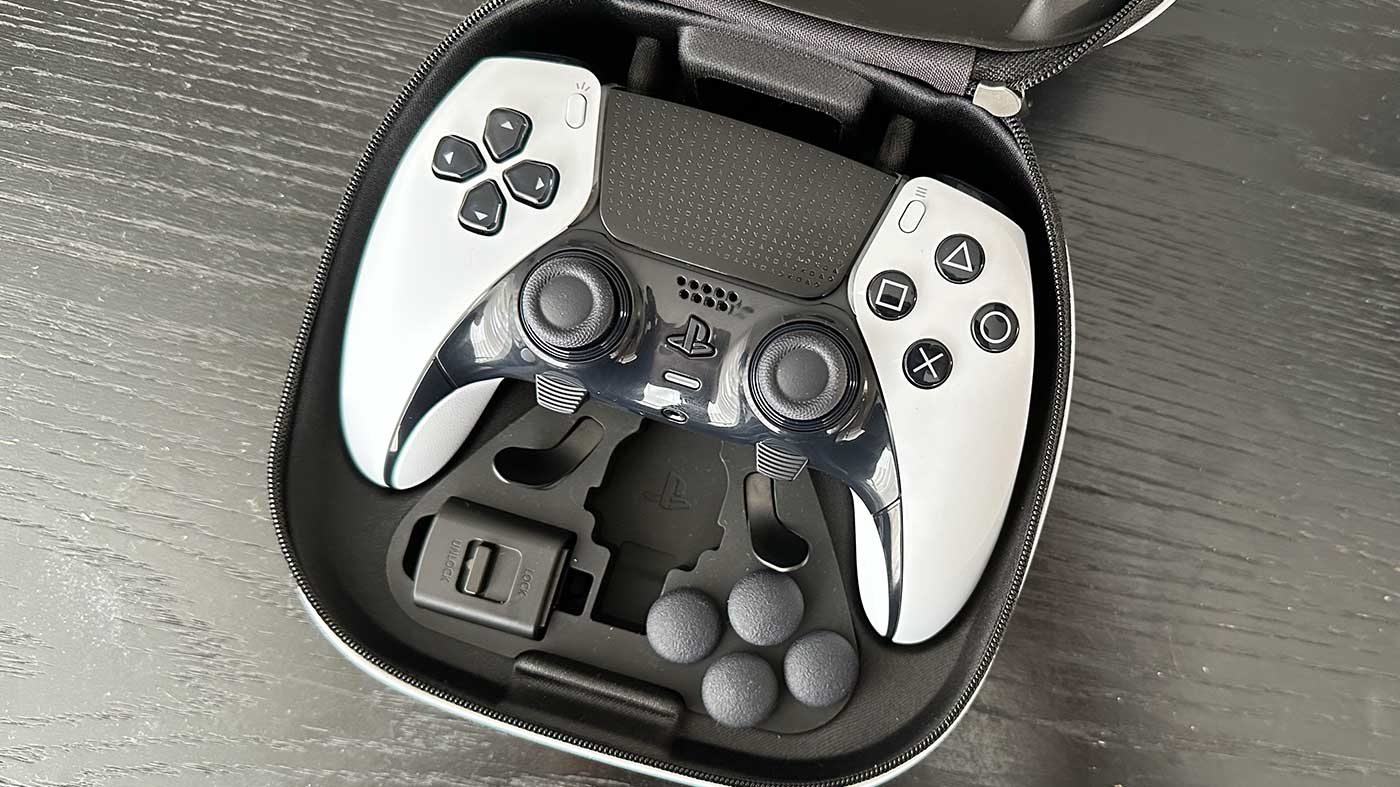
The customization options for the Edge Pro are extensive. The controller includes interchangeable thumbsticks with different heights and textures, allowing players to customize the feel for different game genres. The back paddles, a feature previously available only through third-party modifications, are now standard. Four paddles can be programmed with any button input, allowing players to perform complex actions without removing their thumbs from the analog sticks. The controller includes software profiles that can be switched on the fly, adapting to different games or different characters within the same game.
The competitive gaming applications of the Edge Pro are significant. The haptic feedback can convey information that would otherwise require visual or auditory attention, freeing cognitive resources. A player can feel an enemy approaching from behind through subtle vibrations before hearing footsteps. A racing driver can feel the precise moment tire grip is about to break, allowing for corrective input faster than visual feedback permits. Professional esports players are adopting the Edge Pro not for the customization options but for the competitive advantage that haptic awareness provides.
The developer adoption of the Edge Pro’s haptic capabilities has been strong. Sony’s first-party studios have incorporated advanced haptics into their games, with The Last of Us Part III and God of War Ragnarök sequel using the controller to convey environmental details, combat impacts, and narrative moments. Third-party developers are following; major franchises including Call of Duty, FIFA, and Grand Theft Auto have announced support for the Edge Pro’s advanced haptic features. The controller is becoming the standard for PlayStation development, with developers designing experiences around its capabilities.
The price of the Edge Pro reflects its position as a premium product. At $250, the controller is more than twice the price of the standard DualSense. Sony is targeting the enthusiast market—players who value the competitive advantages and customization options enough to pay the premium. The company has also released a lower-priced version, the DualSense Edge, without the interchangeable thumbsticks and back paddles, targeting players who want the haptic improvements without the customization features.
The haptic revolution that the Edge Pro represents is not about vibration for its own sake; it is about creating a deeper connection between player and game. The controller that rumbles when something happens is a tool for providing feedback. The controller that can simulate texture, weight, and impact is a tool for creating immersion. The DualSense Edge Pro is showing what haptic feedback can be when it is treated not as an accessory to the gaming experience but as a core component of it.